Thermoforming
Don't just cut the sheet. Change its form.
The Process
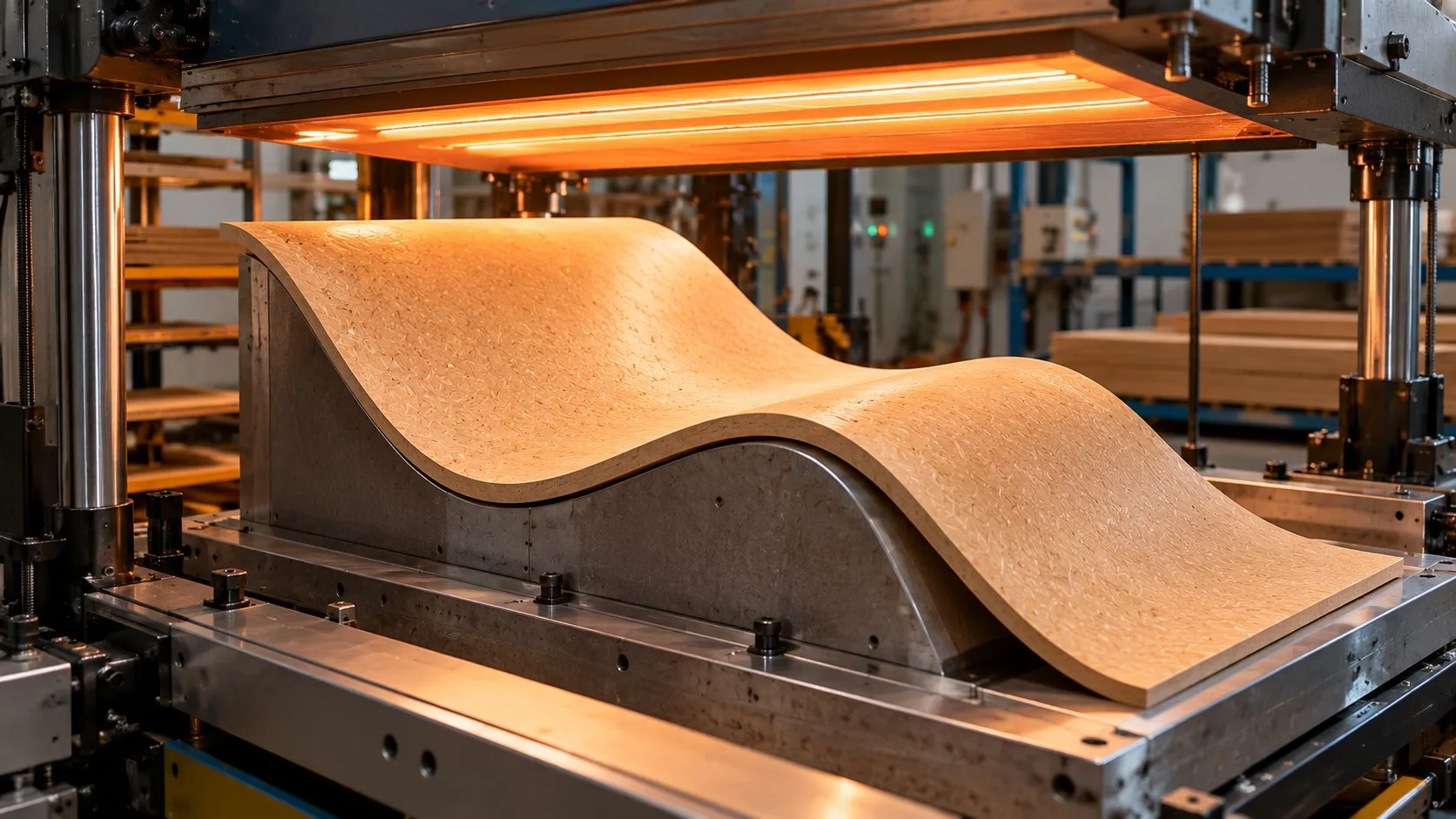
RelWOOD® can be heated and moulded into curved and three-dimensional forms.
For practical thermoforming, the material is heated to approximately 100–120°C, formed into the required geometry and held in position while it cools.
The exact process changes with the thickness, size, geometry, heating method, equipment and design.
Design Flexibility
Heating the material to 100–120°C unlocks limitless geometric capabilities:
And this is where things get interesting: you are not limited to simply bending a board — design the sheet first, and then form it.
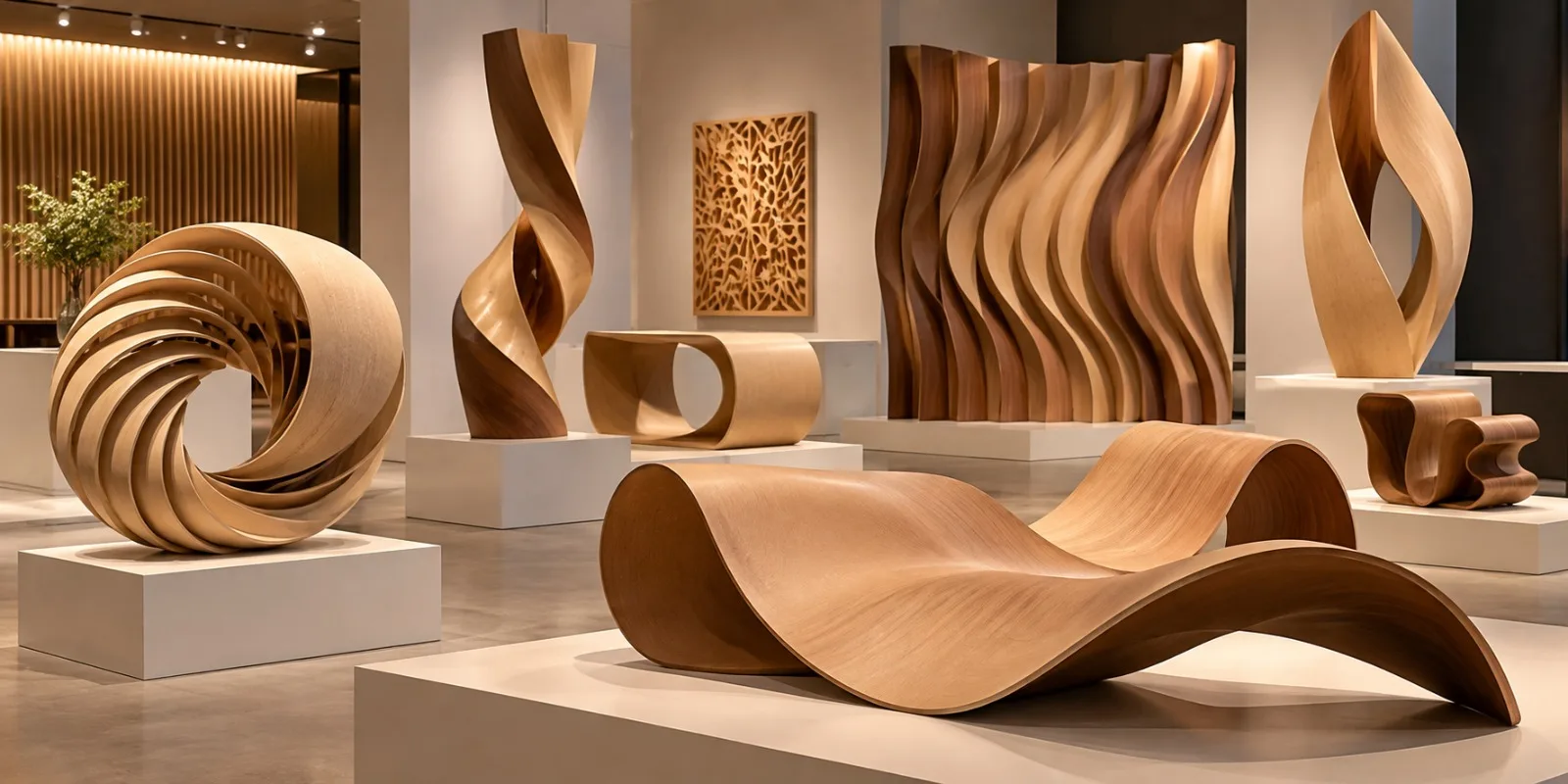
A designer sees a shape.
A fabricator sees a process.
A manufacturer asks: “Can I make this repeatedly?”
RelWOOD® brings these three questions together.
The RelWOOD-smith
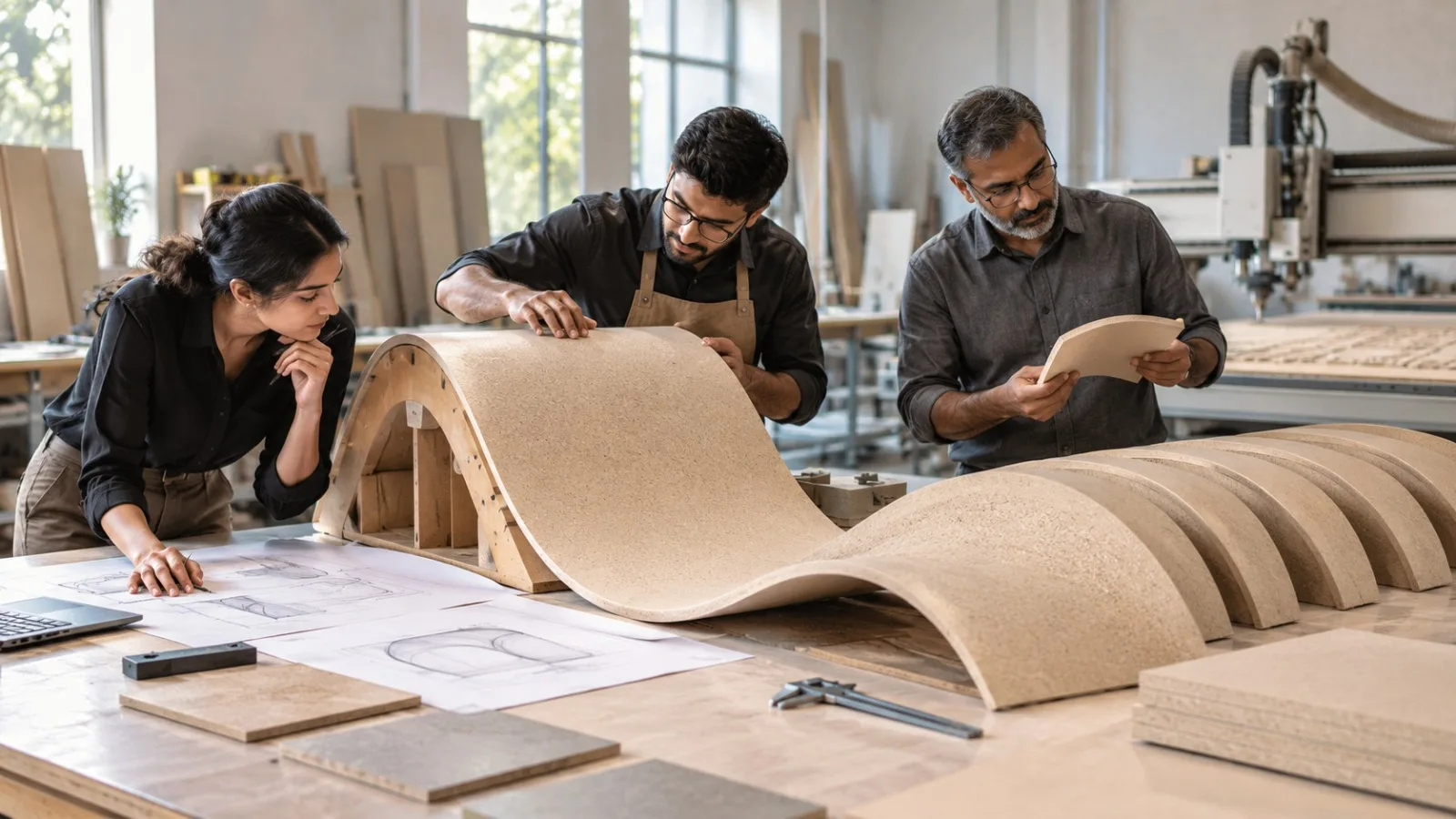
Thermoforming is not simply a button you press.
You learn how the material behaves.
Different thicknesses, sizes, geometries, designs, heating methods and equipment produce different behaviour.
The more you work with RelWOOD®, the better you understand it.
Think like a RelWOOD-smith.
Show us the problem.